
Creator Spotlight with American Influencer Council Chairperson Sam DeMase
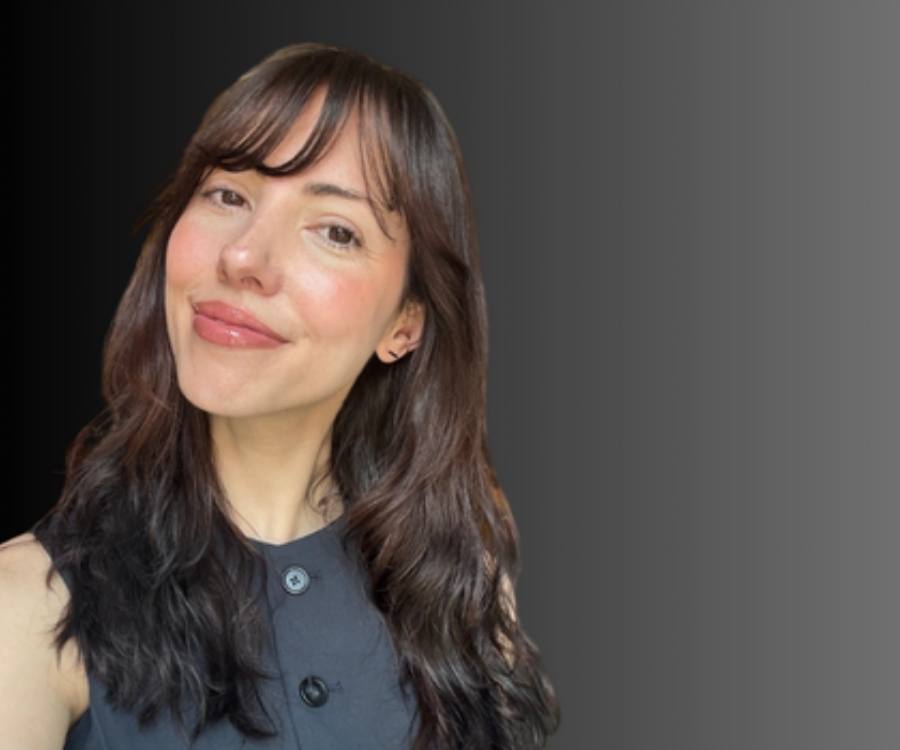
This week, we are spotlighting Sam DeMase, the newly appointed Chairperson of the American Influencer Council (AIC) Board of Directors and a new Copyright Alliance Creator Member. AIC is the first 501(c)(6) not-for-profit membership trade association created by and for career creators who advocate for the small business rights of U.S.-based influencers. The Copyright Alliance and the AIC have partnered since 2021, and through that collaboration, there is a shared commitment to protect the copyrights of all creators. The goal is simple: put copyright education and protection directly in the hands of the creators who need it.
Sam is a workforce futurist and self-advocacy expert. She has spent more than a decade translating how corporate America works into tools that professionals can use. In 2020, she launched Power Mood, a career and personal development platform that now serves a community of more than 850,000 followers. She is the author of two books published by Rock Point, titled Power Mood: Unlock Your Confidence, Transform Your Life & Command Your Value and The Power Mood Mindset Workbook. Library Journal called her “the career mentor that many corporate women have needed but never had.” Her community has collectively earned over $3 million in raises and counting. You can follow Sam on Instagram @apowermood.
You spent more than a decade inside corporate America before becoming a creator. What made you build Power Mood, and what are you actually creating?
I left the corporate world because I was ready to embark on my founder journey as a full-time career expert and educator. Most career advice was either abstract or written by people who had never been in the rooms where raises and promotions are decided. I had been in those rooms for over a decade. So, I started building the tools I wished I had at 25. Today, that work lives in two books, digital courses, templates, and a daily practice I share with my community. I am not creating inspiration. I am creating intellectual property that people can use to change their income.
When did you first become aware of copyright, and why did it start to matter to you?
It became real the moment I published my first book and started selling digital products. A framework in my head is just an idea. The same framework written down, packaged, and sold is an asset. That is exactly when copyright stops being a legal abstraction and becomes the thing your business is built on. Once you are selling your work, your copyright is your inventory. You learn quickly that you must protect it.
Can you walk us through how you turn your expertise into work you can sell? Does everything you produce make money?
It starts with a problem my community keeps running into, such as negotiating a raise or pricing their labor as a business owner. I build the tool that solves it: a workbook, a course, a template, a script. Not everything I make earns directly. Some of it is free content that builds trust, and that trust is what makes the paid work possible. But everything I produce is mine. Whether it earns a dollar today or not, it is protected work, and I treat it that way.
What is the biggest misconception about your line of work?
That career content is not real intellectual property. People assume a course, or a caption, is not worth protecting because it is digital, and it looks easy. It is not easy. It is years of expertise compressed into something useful and then sold. Career creators are running media companies and pricing their own labor. The work is real, the business is real, and the copyright is real. The infrastructure to protect it simply has not caught up yet.
Have you experienced copyright infringement, and how has it affected you personally and financially?
Yes. I have seen my written work lifted word for word, and my frameworks re-packaged and sold by people who never built them. As a solo business owner, that lands twice. There is the income someone else takes by selling what is mine. Then there is the time and money I spend to stop it. When you are the whole company, every hour you spend chasing an infringer is an hour you are not spending building. That is the real cost, and most creators are paying it quietly. And there is the emotional toll. I still remember the first time I saw my work stolen. I felt helpless, like I was screaming into the void. As a new creator, I did not know what my options were or how to respond. It can feel like this information is intentionally gatekept. That is exactly why the work the Copyright Alliance and the AIC do to empower creators matters so much.
What do you do when you find someone using work you invested your intellect, time, and money into?
I do the same thing I teach my community to do in a negotiation. I do not talk myself out of it first. Too many creators self-reject. They decide it is not worth the fight before they have even sent the first notice. I document everything, I make sure my work is registered for copyright, and I send the takedown or the cease and desist. Enforcing your copyright is self-advocacy. It is the same muscle you use to ask for what you are worth. Never be the one to say no to yourself.
What is the best piece of advice you would give other creators about copyright and how to protect themselves?
Treat your copyright like business infrastructure, not paperwork you will get to later. Register your important works, because registration is what gives you real options if someone steals from you. Read your contracts before you sign, because you can give away more rights than you mean to. And use the resources built for you. The AIC curates a free Resource Hub with copyright guidance from the Copyright Alliance, and AIC Creator Members receive complimentary access to a Copyright Alliance Creator Membership. You do not have to figure this out alone.
What is your biggest copyright-related challenge right now?
Speed and scale. The internet copies faster than any one person can respond. A product I spent months building can be screenshotted, repackaged, and reposted in minutes, across platforms I cannot all monitor. As a solo business, you cannot out-police the entire internet. That is exactly why creators need an association behind them and shared resources, so protection does not depend on one person staying online all day.
How has AI changed your work, and where do you and the AIC stand?
AI is being trained on the work of creators, often without our consent and without payment. For someone whose business is written frameworks and original content, that is not a hypothetical. My work, and the work of millions of creators, is already inside those systems. My position is the AIC and the Copyright Alliance’s position. Human creativity has value, the works used to train AI should be licensed, and creators should be compensated and able to see when their work is used. This is not anti-technology. It is pro-creator. We are asking for the same thing every other industry expects, which is to be paid for what we make.
“Once you are selling your work, your copyright is your inventory. Enforcing it is self-advocacy. It is the same muscle you use to ask for what you are worth.”
CONNECT WITH SAM