
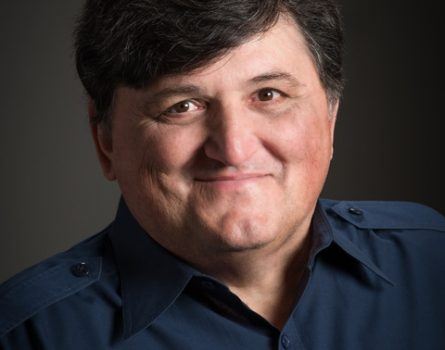
Copyright Alliance CEO Keith Kupferschmid and Former Register Maria Pallante Discuss Google v. Oracle

Maria Pallante Post publish date: October 1, 2020

I recently spoke with former Register of Copyrights Maria Pallante about the copyright case Google v. Oracle America pending before the U.S. Supreme Court. Maria served for more than 10 years as U.S. Copyright Office senior counsel, including nearly six years at the helm of the Office as Register of Copyrights until 2016. She is currently the President and CEO of the Association of American Publishers (AAP), which filed an amicus curiae brief in the case. The Copyright Alliance filed a brief as well.

In 2010, Oracle sued Google for copying and distributing huge amounts of Oracle’s popular Java SE Code in its Android phones, alleging a number of serious claims including copyright infringement. Following several procedural developments in the case, the Court of Appeals for the Federal Circuit sided with Oracle in 2014, reversing a district court opinion and jury determination in favor of Google.

To be clear, Google admits that it copied Oracle’s code without permission – more than 11,000 lines of code! In its filings with the Supreme Court, it continues to make two sweeping arguments, one asserting fair use and the other questioning the copyrightability of Java Code.

I was pleased to have the opportunity to ask Maria’s legal opinions regarding the case, starting with the following more general question:

Keith: Is this case important to people outside of the software and coding industries, meaning should all creative industries be watching it?

Maria: Yes, absolutely. Everyone who relies on the Copyright Act should pay attention to this case, not only because the Supreme Court infrequently takes copyright cases, but also because this is the first time in 26 years that it will decide the merits of a fair use defense. Put another way, all authors rely upon the expectation of enforceable exclusive rights and appropriately defined fair use contours. This is true whether we are talking about the authors of books, musical compositions, motion pictures, or computer code! In Google v. Oracle, the dispute is about the expression and appropriation of software, but the Justices will be taking us through cornerstone principles of copyright law in reaching a decision. We should fully expect both lawyers and lower courts to apply the outcome to other copyright contexts, some of which will invariably reflect similar efforts to devalue creative expression and gut the marketplace for licensing transactions, without which copyright law cannot operate.

Keith: Although Java Code has been hugely popular and successful for Oracle and its licensed customers, Google has asserted that copyright law doesn’t apply to the portions it copied. What do you make of this argument?

Maria: I have a great deal of difficulty with Google’s position. It is really arguing two points: first that Java SE code is an uncopyrightable “method of operation,” and second that even if it is copyrightable, it has achieved a level of success that makes it indispensable to downstream actors like Google and it should therefore lose protection. I think both arguments fail.

On the first argument, the code that Google copied is no different than any other computer program that is copyrightable as a literary work under the definitions of the Copyright Act. As background, we know that Congress went through great deliberations to bring computer programs squarely into the four corners of the statute, and that it rejected other possible legal treatments such as sui generis protection. It is also true that Congress recognized some limitations, namely that the expression of a computer program might occasionally be constrained by functionality. In these narrow circumstances, where the idea and the expression of the program have merged and are difficult to separate, Congress made clear that the expression should not be protected. The so-called “merger doctrine” does not, however, foreclose copyright protection if the expression can be written in any number of different ways to achieve functionality, as was the case when Oracle’s predecessor-in-interest first created and invested in the now hugely successful Java platform. At the heart of Google’s position is the reality that developers prefer Java code when writing programs for Android, which in my opinion suggests that the dispute is less about whether Java is independently expressed under the tests of the Copyright Act and more about the inherent value of Java to Android products.

Regarding Google’s second argument, it would be an absurd conclusion if we began injecting creative works into the public domain whenever they reach a high level of success. The fact is there will always be creative works that are game changers in the copyright marketplace, just like there will always be creative works that are not. This calculus of ingenuity, creation, risk, and investment is wired into the Copyright Act, sometimes paying off, sometimes not, but always in search of the next great work that will propel the public forward. By all accounts, the Java platform was a game changer for the software industry and for that matter the modern world; depriving it of protection would be at odds with the principles of copyright law. To offer a comparison, imagine if we stripped the author of a once-in-a-generation musical of the ability to license it for adaptation into other languages, media, or business models, because of its immeasurable popularity. Robbing authors when their works become popular is not how the law encourages progress in the United States.

Keith: Google has also argued that its appropriation, though extensive, is permissible under fair use. Will this be a difficult determination for the Court?

Maria: No, actually, I think the fair use question will be pretty routine for the Court. It will consider the judge-made doctrine of “transformative use,” and weigh the four statutory factors of section 107. I do not see a colorable transformative argument here because smart phones do not present a new or different context than other computers, and because, in any event, Oracle already was licensing the Java platform for use on mobile phones when Google copied and deployed it to great advantage in its competitive Android products. The Court will likely find that Google’s copying was extensive, its use was commercial, and that it did not alter the copyrightable expression in dispute.

I would also note that the Supreme Court is well aware that copyright markets reveal themselves over time, which is why future markets and ramifications are always part of a fair use analysis – not just for the copyright owner, but also for its derivative licensees. What Google is arguing would quickly fall apart if one looks outside of software to, say, a movie based on a novel. The author of the novel may not have envisioned her book as the basis of a movie, original soundtrack, or other downstream property, but in fact the creators who come after her owe their respective creativity to that underlying literary work, and to the value chain of copyright that both incentivizes and authorizes derivative properties. This is how the Copyright Act works: it assumes that creativity will beget more creativity, and that downstream authors will account to the authors who come before them by seeking and securing licenses.

With all of this in mind, I hope that the Supreme Court will agree with the Federal Circuit’s conclusion that no reasonable person could conclude that Google’s verbatim copying of original code into a competing commercial product constitutes fair use.

Keith: The Federal Circuit overruled the lower court on fair use, and while this was welcome news for Oracle, Google seems to be arguing that an appellate court can’t do this. What is going on here?

Maria: This part of the case is about the rules of civil procedure. I very much hope that the Supreme Court will affirm that courts may decide questions of fair use in the same manner as any other copyright issue, meaning that jury determinations should be reviewable on appeal. I think there will be huge ramifications for the copyright framework otherwise, especially as to the well-established role of the courts in evolving the law. In other words, the contours of fair use are so critical to the overall integrity and balance of the copyright statute that to place the jury’s determination beyond the reach of the courts would be tantamount to removing questions of fair use from the courts – including in instances where the court might accept the jury-agreed facts but reach a different legal outcome.

Keith: It is always a bit of a mystery as to why the Supreme Court takes some cases and not others. What would you say is at stake in this case?

Maria: I think it will be very helpful to hear from the Supreme Court about fair use in a twenty-first century case. Ideally, it will conclude that copyright principles are impervious to the passage of time or the commercial interests of any one defendant, and that Google should have entered into a license if it wanted to leverage Oracle’s code. Copyright law is about integrity and balance. Balance has sometimes been deployed by critics of copyright protection as a justification for weakening copyright protection and expanding fair use. But to me, balance is about the overall copyright scheme. Does the law prescribe clear exclusive rights to authors and their licensees? Are there corresponding processes and remedies available when infringement occurs or is alleged? Are the exceptions and limitations, including fair use, appropriately calibrated and applied so as to further a justifiable policy objective, but not so broad as to overtake the author’s rights and ability to monetize his or her work, which are also policy objectives? And let’s not overlook that copyright commerce and licensing are also very important objectives. All of these things fuel creativity, the modern marketplace, and, ultimately, a fantastic public repository of authorship and progress.

Creator Spotlight with Fine Artist Mary Adelaide Clark

Fine Artist Mary Adelaide Clark Post publish date: September 29, 2020

Mary Adelaide (“Addie”) Clark is a recent graduate of Davidson College in North Carolina and is now embarking on a career in the fine arts. Her work can be found at www.Maryadelaide.art and at @adelaide_art on Instagram.

What was the inspiration behind becoming a creator? What do you enjoy most about the creative process?

I’ve always been creating in one way or another. I would make little houses out of shoeboxes when I was younger and draw on all my folders and notes in school. Art as a full-time career never seemed feasible though. I was worried about the lack of structure and clear direction in the long-term. It came to a point in college though when I realized (or maybe accepted) I just didn’t have the energy to do anything I didn’t love. I love that the creative process always reminds me to stay present. When I’m creating, I can’t set rigid expectations because I’ll end up missing what’s already working.

Can you take us through your creative process? How long does it take? Does everything you produce make money?

My creative process is a little all over the place. I work in a lot of different formats and mediums, but the direction I take depends on the space I’m in. When I’m painting, It is a lot of spray paint and fast acting material that I throw together to see what happens. From there, I’ll take a photo of the piece and rework it digitally, which I can then use as a reference point. Most of what I make doesn’t produce money, but it gives me material to pull from later. I’ve always thought of art as being like sports, the games are only 10% of the play and the rest happens in practice.

What do you think is the biggest misconception about your line of work?

I’m not sure if I know the answer just yet, as honestly, I may be the one holding onto some misconceptions. Originally, I thought that art could only be a side job unless you made it big. But with all the technology and resources available today, there’s so much more possibility than I ever realized.

When did you first become aware of copyright, and why?

Copyright has been in the back of my mind for a while; I knew it existed, but I get nervous about anything that involves a lot of writing, rules, or paperwork. So, I tried to ignore it for a little while. With my paintings, the value is in the physical textures and layers of material, so I wasn’t worried about showing them off online. But I was producing so much digital work at the end of my senior year at college and didn’t know how to protect it. Then I looked into copyright and the process of registering your work to protect it is much easier than I thought, and I wish I hadn’t been so scared of it.

What do you do when you encounter someone stealing something you’ve invested your intellect, time and money into?

Since I’m new at the business side of art, I fortunately haven’t run into the legal or financial issues of protecting my work yet. However, authenticity has become such an important priority of mine, and I feel like copying not only steals from my success but makes it harder for the infringer to find their authenticity too.

What is your biggest copyright-related challenge?

I’m currently just learning about copyright and making sure I’m setting up my works to be protected by copyright. Since I only create five prints of any painting I create, I want to ensure that I can promise buyers that the works they purchase from me will be protected in the future.

“It is so ordered” – A Look Back at Justice Ginsburg’s Copyright Legacy

Justice Ginsburg's Memoriam Post publish date: September 24, 2020

Last week, the world lost a legal giant, Justice Ruth Bader Ginsburg, after 27 years of service on the highest court in the land. Justice Ginsburg, the second woman ever appointed to the Supreme Court, is widely celebrated as a champion of women’s rights, and a dedicated advocate for human and civil rights across the board. And within the copyright law and policy arena, Justice Ginsburg is also known for having authored numerous noteworthy copyright law opinions, concurrences, and dissents.

Community for Creative Non-violence v. James Earl Reid (DC Cir. 1988)

In 1988, prior to her tenure with the United States Supreme Court, Justice Ginsburg was a judge in the U.S. Court of Appeals for the DC Circuit and she authored an important opinion in Community for Creative Non-violence v. James Earl Reid (1988)a case that analyzed the Copyright Act’s “work made for hire” doctrine.

A non-profit devoted to the welfare of homeless people (CCNV) sued the sculptor who created a display that would dramatize the plight of the homeless as a modern Nativity scene. After repairing the sculpture following its display, the sculptor refused to return it to CCNV for a lengthy tour, which he asserted would damage the sculpture. CCNV sued the sculptor, claiming to be the sole copyright owner of the work.

The various circuits used different tests to determine whether a creative work was a work made for hire, a distinction that affects who is considered the copyright owner. The Second and Seventh Circuits used tests of “actual control” and “sufficient supervision and direction,” along with a determination of whether a contractor was an employee, to determine authorship.

On the other hand, the Fifth Circuit used a “literal interpretation” test that used agency law to determine the scope of the working relationship, designating it as either an employment relationship or independent contractor relationship. The Fifth Circuit also looked to at whose “instance and expense” the work was being created and who had the right to direct and supervise the manner in which the work was performed.

The DC Circuit, in an opinion authored by then-Judge Ginsburg, held that the literal interpretation best suits the Copyright Act of 1976 and found that the sculpture does not fall under the work made for hire category: the work did not fall within one of the enumerated work for hire categories and there was no written instrument signed by the parties describing the work as a work made for hire. But, the Court found that both parties played a role in the creation of the sculpture – the sculptor created the figures, while CCNV created the base and steam grate the figures would rest on.

While the Court did not fully decide the issue of who the copyright owners were, as further investigation was needed to determine if any other parties could qualify as authors for CCNV’s contribution to the sculpture, this case clarified an approach to the work made for hire doctrine that courts use to this day. The following year, the Supreme Court affirmed the DC Circuit’s holding, and five years later, Ginsburg was appointed as an Associate Justice in that very court.

SCOTUS Opinions

Eldred v. Ashcroft (2003)

Here, Justice Ginsburg authored the Supreme Court’s majority opinion that the Copyright Term Extension Act’s (CTEA’s) extension of copyright duration by 20 years did not violate either the Copyright Clause’s “limited Times” prescription or the First Amendment’s free speech guarantee. This case was brought by a collection of individuals and businesses who created products or services based on public domain works.

First, Petitioners argued that the 20-year extension violated the “limited Times” prescription, essentially asserting that a time period, once set, becomes inalterable. But, the Court found that the word “limited” is not delineated in such a way: a 20-year extension is still a limited period of time, and applying this extension to both existing and future works allows for all copyright owners to be governed evenly under the same set of rules.

Second, Petitioners argued that Congress did not rationally exercise its power under the Constitution’s Copyright Clause by passing the CTEA. The Court asserted that it defers substantially to Congress in reviewing actions under the rational basis test. The Court found that the CTEA is a rational enactment and not subject to Court scrutiny. Overall, the Court found that the CTEA did not violate any aspect of the Copyright Clause.

Next, the Court addressed Petitioners’ assertion that the CTEA is a regulation of speech that violates the First Amendment. Justice Ginsburg wrote how the Copyright Clause and First Amendment were adopted close in time, with similar principles in mind. In addition, the CTEA, and copyright law in general, incorporates speech-protective safeguards by ensuring only expression, not ideas, are protected, and that ideas, theory, and fact, even if present in a copyrighted work, are still available for public use. Even further, the fair use defense allows individuals to use others’ expression in certain circumstances.

Petitioners likened the CTEA to communications law’s must-carry rules. But, unlike with the must-carry rules considered in Turner Broadcasting System, Inc. v. FCC, copyright law does not require anyone to share another’s’ speech against their will.

Overall, the Court asserted its deference to Congress and emphasized its belief that the CTEA did not violate the Copyright Clause or First Amendment, allowing for the extension of copyright terms and compliance with international treaties.

Golan v. Holder (2012)

In Golan v. Holder, Justice Ginsburg delivered the Court’s opinion supporting new copyright protection for foreign authors under the Berne Convention and Uruguay Round Agreements Act (URAA), including for authors whose works were in the public domain. Prior to the URAA, foreign works were not protected by the Copyright Act and were considered to be within the public domain in the United States.

In adopting the URAA, the United States gave national treatment to foreign authors, protecting their works under the same conditions American authors’ works were protected. For some authors, this meant their works would come out of the public domain to enjoy what remained of their copyright protection term.

Petitioners, a group of orchestra conductors, musicians, publishers, and others who used public domain works in their business, argued that the URAA violated the Copyright Clause and First Amendment. Primarily, Petitioners argued that works that fell into public domain cannot be brought out of it, and that bringing these works out of the public domain removes “vested rights” Petitioners have in these works.

Speaking for the Court, Justice Ginsburg found that the URAA did not violated either the Copyright Clause or the First Amendment. The URAA did not create perpetual copyrights and, historically, Congress had given copyright protection to public domain works several times. In addition, Justice Ginsburg stated that the Court “will not second-guess Congress’ authority or political choice in embracing the Berne Convention and providing equitable treatment to “once disfavored foreign authors.”

Next, Justice Ginsburg held that the creation of new works is not the sole means through which Congress can “promote the Progress of Science” – the Progress of Science can also be promoted through the dissemination of works.

Finally, the Court addressed Petitioners’ First Amendment complaint that the URAA affected their freedom of expression by preventing them from using these now-protected works. Justice Ginsburg explained how the URAA does not affect the idea/expression dichotomy codified in the Copyright Act, nor did it affect the fair use defense. Effectively, Petitioners could still pay for the right to use these now-protected works or act under fair use – referring back to the petitioners in Eldred, the Court explained that Petitioners did not have any “vested rights” in works that had entered the public domain.

Through Golan v. Holder, the Court, led by Justice Ginsburg, held that Congress did have the power to enact the URAA. The Court also solidified the idea that works in the public domain can be brought out to receive copyright protection, complying with the Copyright Act’s “limited Times” requirement, and that the idea/expression dichotomy and fair use doctrine allowed sufficient First Amendment protection in current copyright law.

Petrella v. Metro-Goldwyn-Mayer, Inc. (2014)

Justice Ginsburg delivered the Court’s opinion regarding the application of the doctrine of laches to civil copyright claims that are still brought within the three-year period of time prescribed by the federal statute of limitations.

Here, the daughter of an author who wrote two screenplays and a book with boxer Jake LaMotta sued Metro-Goldwyn-Mayer (MGM) for creating the film “Raging Bull,” asserting that MGM infringed on Petrella’s rights in the screenplay and its derivative works. The federal district court held that Petrella’s legal claim was barred under the doctrine of laches since she took a long delay in filing the claim, which adversely affected MGM’s ability to fight it.

Justice Ginsburg, writing for the Court, explained the relationship between legislation and the doctrine of laches – how, generally, the doctrine of laches applies to equitable claims for which Congress has not prescribed a time limitation. Before the enactment of a statute of limitations for federal copyright suits in 1957, courts used analogous state statutes of limitations and sometimes invoked laches to abridge the state law requirement – this was how courts filled that legislative hole. But, a statute of limitations for copyright law now exists. Further, the copyright statute of limitations itself considers delay by only allowing a successful plaintiff to recover for retrospective relief from, at most, three years in the past. For these reasons, Ginsburg explained, MGM could not invoke the doctrine of laches.

Fourth Estate Pub. Benefit Corp. v. Wall-Street.com, LLC (2019)

While an author gains exclusive rights in his work upon its creation, the Copyright Act requires that “registration of the copyright claim has been made” before a copyright owner can pursue an infringement claim in court. But when exactly has registration been made?

In this case, Fourth Estate, a news organization that produces online news articles, sued Wall-Street.com, a former licensee, when Wall-Street.com failed to remove all Fourth Estate content from its website after cancelling its licensing account.

This case turned on whether Fourth Estate, which did not have finalized copyright registrations for its work, could pursue a civil action against Wall-Street.com under the Copyright Act, which required that registration be made prior to filing a lawsuit. The Court was tasked with deciding whether a “registration has been made” under section 411(a) of the Copyright Act when the copyright owner submits a completed application, fee, and deposit (known as the “application approach”, or when the Copyright Office acts to either grant or refuse the registration (known as the “registration approach”).

Justice Ginsburg, speaking for a unanimous court, explained that the statute requires the Copyright Office to act on a copyright registration application before a copyright claimant may commence an infringement suit. Justice Ginsburg pointed to several provisions of the Copyright Act, explaining that if the application approach was correct, these sections would be repetitive. As well, the preregistration option for works that are especially susceptible to prepublication infringement would not need to exist if a copyright owner could pursue a federal action as soon as he applied for copyright registration.

This decision greatly impacted copyright law as it means that copyright owners cannot immediately pursue legal action when they uncover infringement; instead, if they do not have a copyright registration for their work, they must wait until the Copyright Office has made a registration decision to file civil suit, which can take months. Justice Ginsburg was sympathetic toward this problem, stating that, “the statutory scheme has not worked as Congress likely envisioned. Registration processing times have increased from one or two weeks in 1956 to many months today” but recognized that “[u]nfortunate as the current administrative lag may be, that factor does not allow [the Court] to revise ¤411(a)’s congressionally composed text.”

Concurrences

Justice Ginsburg’s imprint on copyright law didn’t end with her majority opinions – while her concurring opinions are not precedential, they remain insightful and influential.

MGM v. Grokster (2016)

MGM v. Grokster affirmed the secondary liability doctrine as it applies to copyright infringement. In this case, MGM sued Grokster, accusing it of inducing consumers to illegally download and share copyrighted works. Justice Souter delivered the opinion of the Court, which described the evolution of the digital distribution of music and explained why the Court believed imposing indirect liability on Grokster was a strong argument.

Overall, the Court explained that Grokster contributorily infringed on copyrighted music by (1) intentionally inducing or encouraging direct infringement and (2) providing a widely shared service that is used to commit infringement without substantial lawful use. While copyright law did not include liability for another’s infringement, well-established common law principles allowed for the application of these doctrines of secondary liability.

Justice Ginsburg concurred in the Court’s decision, but wanted to speak more on how the Court of Appeals misapplied the Court’s holding in Sony Corp. Of America v. Universal City Studios, Inc. Here, there was no finding of any fair use and very little evidence of non-infringing uses beyond anecdotal evidence. In fact, it seemed that the Court of Appeals relied heavily on the defendants’ own declarations when determining whether the products were capable of substantial non-infringing uses. Overall, Justice Ginsburg reiterated that there was insufficient evidence to grant summary judgment on whether the products were capable of significant non-infringing uses now or over time.

Star Athletica v. Varsity (2017)

The Supreme Court granted certiorari in this case to resolve circuit splits in how to properly analyze designs which may or may not separately exist from useful articles, primarily through a separability analysis. Here, Varsity Brands, a cheerleading uniform manufacturer, sued Star Athletica for infringement of five of their designs Star Athletica argued that the designs were not copyrightable as they were utilitarian, and copyright law does not protect utilitarian designs.

The Court held that “an artistic feature of the design of a useful article is eligible for copyright protection if the feature (1) can be perceived as a two- or three-dimensional work of art separate from the useful article and (2) would qualify as a protectable pictorial, graphic, or sculptural work either on its own or in some other medium if imagined separately from the useful article.” Using this separability analysis, the Court determined that the designs on Varsity’s cheerleading uniforms is separable from the uniforms and eligible for copyright protection.

Justice Ginsburg concurred in the Court’s judgment but not in its reasoning. Justice Ginsburg would not have used the separability test as she did not view these designs as designs of useful articles at all – in her opinion, the designs were standalone copyrightable works that were then reproduced on useful articles.

Dissents

Justice Ginsburg was well known for her dissents and their influential impact. The same rings true for her insightful copyright opinions.

Kirtsaeng v. John Wiley & Sons, Inc. (2013)

In deciding a case regarding the geographic limits of the first sale doctrine, the Court decided whether a foreign version of a textbook can be brought to the US and sold without violating the Copyright Act and the copyright owner’s exclusive rights. The Court found that there are no geographic restrictions on the “first sale” doctrine, allowing individuals to resell their copies of copyrighted works regardless of where they’re manufactured.

Justice Ginsburg dissented from the majority opinion, arguing that the decision was incompatible with Congress’ legislative intent of “protect[ing] copyright owners against the unauthorized importation of low-priced, foreign-made copies of their copyrighted works,” thereby increasing the likelihood of the “international exhaustion” of copyrights, which the United States had been resisting.

Justice Ginsburg described the majority’s concerns as a “parade of horribles” that was “largely imaginary” and dissented from the Court’s focus on international exhaustion. Justice Ginsburg explained that international price discrimination was a financial incentive for authors to address different economic conditions around the world; this incentive is undermined if arbitrageurs can import copies of works from low-price regions to high-price regions.

Further, Justice Ginsburg argued that Congress’ legislative intent in enacting the Copyright Act was to provide copyright owners with recourse against the importation of foreign-made copies of their copyrighted works. Further, the first sale doctrine applied only to copies made in the United States, not copies made abroad. Justice Ginsburg described her view as consistent with those of the United States in international trade negotiations, as opposed to the majority opinion, which was dissonant with those negotiations, as well as dissonant with the Copyright Act’s text and history.

Georgia v. Public.Resource.Org, Inc. (2019)

Justice Ginsburg authored another insightful dissent in Georgia v. Public.Resource.Org, where the Court analyzed whether copyright protection extends to annotations in Georgia’s official annotated code, which were written by a private company.

The Court held that the annotations did not receive copyright protection because, even though a private company wrote the annotations, it did so in a way where the government is considered the author; under the government edicts doctrine of copyright law, “officials empowered to speak with the force of law cannot be the authors of-and therefore cannot copyright-the works they create in the course of their official duties.”

Justice Ginsburg dissented from the majority opinion, agreeing that state laws are not copyrightable but disagreeing in that “not all that legislators do […] is ineligible for copyright protection.” While the government edicts doctrine shields works created by judges and legislators in the course of their judicial and legislative duties, Justice Ginsburg did not believe that the annotations were created in a legislative capacity.

According to Justice Ginsburg, there are key differences between the roles of judge and legislator. Judges interpret and apply the law while legislators make the laws without construing them afterwards. Justice Ginsburg did not categorize the annotations as part of the Georgia Legislature’s lawmaking process; rather, they were simply “explanatory, referential, or commentarial material.” As such, these annotations were used by the legislature in their “auxiliary, not legislative character” and are thereby copyrightable.

With the passing of Justice Ginsburg, the world has lost an icon who exemplified integrity, justice and equality, and whose personal and professional legacy-including her legacy of discerning opinions on copyright law-will live on indefinitely.

Photo credit: Sean Pavone/iStock

Stop Senator Ron Wyden and Big Tech from Crushing Creators’ Hopes for S. 1273-The CASE Act

Chris Castle Featured in Creator Spotlight Post publish date: September 22, 2020

The CASE Act is a bipartisan copyright dispute resolution bill that is inches away from becoming the law of the land. Unfortunately, though, it has stalled in the Senate due to just one Senator. The bill calls for a “small claims” process staffed by U.S. Copyright Office attorneys for a limited category of infringement claims by creators, as well as an opportunity for a quick and inexpensive resolution by users of its various defenses to copyright infringement, such as fair use. The bill is an alternative approach to the one-size-fits-few federal copyright litigation that is far too expensive and complicated for working creators to utilize.

The CASE Act has been analyzed and debated for over 10 years (see backgrounder), and has already passed the House of Representatives by a vote of 410-6. The Senate version (S. 1273) was reported out of the Senate Judiciary Committee unanimously and is co-authored by Senators Dick Durbin (D-IL) and John Kennedy (R-LA), leaders from both sides of the aisle, who remain committed to the importance and value of this legislation.

You might expect that a bill that that enjoys so much support would have sailed through the Senate by unanimous consent. However, instead, Senator Ron Wyden (D-OR) placed a hold on the bill almost as soon as it was introduced. This action comes as no surprise to many members of the creative community as Senator Wyden puts a hold on every copyright bill that’s introduced.

Despite this being the case, Senator Wyden’s alleged support for progressive causes has continued to appeal to many creators across his state. This time, however, Oregon creators have realized that Senator Wyden is threatening their very livelihoods by blocking the CASE Act from moving forward in the Senate. He does everything he can to slow down, obfuscate, detract and pick apart any-and I meanÊany-artist rights legislation that comes to the U.S. Senate, particularly if it’s copyright legislation.

CASE Act Billboard Portland, Oregon Ron Wyden hold on Case Act

Prior to the CASE Act, Senator Wyden was able to get away with his anti-copyright adventurism by remaining in the shadows. But this legislation was a bridge too far for creators who have come out in vast numbers to protest his actions by mounting billboard advertising campaigns in his state, along with creators across the country conducting social media and letter writing campaigns. Yet throughout all of the attempts to help Senator Wyden understand the urgency of the bill, he has inexplicably maintained his hold on it while moving the goal posts repeatedly since fall of 2019.

When someone engages in the sort of negotiation shape-shifting that Senator Wyden has engaged in, the objections are so inconsistent that they do not seem genuine. So, it should be no surprise that creators are increasingly questioning his motives.

Why is he doing this? Why would a Senator from Oregon always favor Big Tech over his own constituents? Senator Wyden has a long history of protecting tech companies. And his connection to them is, no doubt, the Oregon data centers operated by companies like Google, Facebook, Amazon and Intel. These data lords are attracted by Oregon’s abundance of taxpayer-financed green energy from the Columbia River watershed. Indeed, Google recently announced plans for carbon free data centers. These data centers illustrate a prime example of the push-pull of Senator Wyden’s politics: While creators may find achieving green data attractive, they don’t intend to hand their life’s work to copyright free-riders to accomplish that goal, nor should they.

Companies like Google want to stop the copyright small claims legislation for a very simple reason-the stick of federal copyright litigation favors companies with trillion-dollar market caps. And Senators Durbin and Kennedy, along with the Senate bill’s numerous cosponsors, want such shenanigans to stop. If Senator Wyden won’t remove his hold out of respect for his constituents, he should do so out of respect for his colleagues in both bodies and on both sides of the aisle who are looking to protect the livelihoods of creators who urgently need their assistance through the enactment of the CASE Act.

Castle is an Austin, Texas attorney.


For more information about the CASE Act visit here.

Photo credits: headshot: Brenda Ladd Photography, billboard: Tim Trautman

Senate DMCA Hearing Explores the Current State of Section 1201

Washington DC Capitol view on cloudy sky Post publish date: September 18, 2020

On Wednesday, the Senate IP Subcommittee held a fifth hearing in its ongoing investigation into the viability of the Digital Millennium Copyright Act (DMCA) twenty-two years after its enactment. Titled Are Reforms to Section 1201 Needed and Warranted?, the hearing featured two panels of copyright experts from government, industry, and academia discussing the current state of Section 1201 of the DMCA, which deals with the circumvention of copyright protection systems.

Subcommittee Chairman Thom Tillis (R-NC) opened the hearing by explaining that the goal of the meeting was to explore potential reforms of the “self-help provision” of the DMCA, which gives copyright owners a cause of action when someone circumvents the technological protection measures (TPMs) employed to prevent unauthorized access to copyright protected works. Stressing the importance of Section 1201 in striking a balance between the needs of copyright owners and consumers, Tillis said that he was particularly interested in hearing from the witnesses about ways to streamline 1201’s triennial rulemaking process and the possibility of amending the statute to permit expanded exemptions for third-party assistance.

Ranking Member Chris Coons (D-DE) also delivered brief opening remarks, echoing Tillis’s concern for balancing the needs of copyright owners and consumers. Coons also explained that the drafters of the DMCA had the foresight to craft a flexible framework to establish reasonable exemptions, and he welcomed input from the witnesses about whether the existing flexibility is sufficient.

Regan Smith

After opening remarks, witness testimony began with Regan Smith, General Counsel and Associate Register of Copyrights at the U.S. Copyright Office. Smith was the sole witness on the first panel, which was designed to allow the Subcommittee to draw on the deep experience of the agency in charge of administering the 1201 rulemakings. Describing the protections of Section 1201 as integral to discouraging piracy over the past 20 years, Smith also explained that the law has allowed innovative companies to provide consumers with a wide array of content delivery systems at a variety of price points.

Smith also recognized that much has changed since the enactment of the DMCA, and 1201 now applies to a number of activities not previously implicated by copyright. Notwithstanding advances in technology that could not have been anticipated in 1998, Smith explained that 1201 was designed to be flexible and that the triennial rulemakings were put in place to ensure that lawful uses are not impeded. Smith referenced the Copyright Office’s comprehensive 2017 policy study on Section 1201, after which the Copyright Office implemented a streamlined renewal system for non-controversial exemptions. The study also considered narrowing the statute to require a nexus between circumvention and copyright infringement, but ultimately found the overall scope and structure of 1201 remains sound and did not recommend any legislative reform. (see the Copyright Alliance’s comments in response to the Copyright Office 1201 study here and here)

Smith went on to say that the Copyright Office recommends that Congress provide discretion in the rulemaking to adopt exemptions that would permit third-party assistance at the direction of an intended user-an exemption that would benefit those who lack expertise to lawfully circumvent protection measures themselves. Finally, Smith explained that the Copyright Office has recommended new permanent exemptions for activities that have been repeatedly found to be exempt or where there is a broad base need, including access for the visually impaired, the repair of computer programs, and the unlocking of mobile devices. Smith’s written testimony can be found here.

Questions

Tillis then opened up the question session by asking Smith if she was aware of any suggested changes to 1201 that the Copyright Office does not believe would be beneficial. Smith said that the Office does not believe a change to the overall structure of 1201 to require a nexus between circumvention and copyright infringement is needed, as it does not fit with Congress’s intent in creating an independent anti-circumvention right that complies with the World Intellectual Property Organization (WIPO) internet treaties.

Tillis then asked if there was anything Congress should consider in order to lessen the burden on the Copyright Office and the participants in the 1201 rulemaking process. Smith said that the Copyright Office believes the newly implemented streamline procedures have gone a long way towards lessening the burden on those seeking exemptions and that it would be helpful if the law was amended to provide for a burden shifting framework so that there is a presumption of renewal for exemptions adopted in the previous rulemaking cycle.

In response to Tillis final question on how the rulemaking process has changed in the five years since she has been with the Copyright Office, Smith said that there has been a large increase in exemptions being sought related to interoperability and the Internet of Things, and that this shift resulted in the streamlined procedures now in place.

Ranking Member Coons then asked Smith what safeguards are in place to prevent third parties from exploiting a possible loophole in an exemption meant to allow them to assist with legitimate circumvention. Smith said that the Copyright Office’s recommendation is that it have discretion to make proposals to the Library of Congress on a case-by-case basis, rather than create an across-the-board exemption that may be subject to abuse.

Coons followed up by asking what policy concerns influenced the Copyright Office’s decision not to permit a blanket exemption for “any lawful or non-infringing use.” Smith said that the Copyright Office looked into what Congress intended in enacting 1201’s separate rights and found that ultimately the rulemaking is set up to provide specific, rather than blanket, exemptions. She noted that the rulemaking has been largely successful, that exceptions like fair use are always applicable, and there are serious concerns that broad exemptions may undermine the ability of 1201 to provide a separate anti-circumvention right.

Coons then asked how else the Copyright Office would suggest streamlining the rulemaking process for stakeholders who have to participate every three years and for the Office charged with managing the rulemakings. Smith responded by again referencing the presumptive burden rule that may make the process more efficient for stakeholders as well as the possibility of expanding some permanent exemptions in order to focus the rulemakings on new technological and marketplace developments. She also reiterated that allowing the Copyright Office discretion to make recommendations to the Library of Congress with regard to third party assistance would help the exemptions reach their intended beneficiaries.

Senator Blumenthal then shifted the discussion towards election security, asking Smith whether a permanent exemption for research involving voting machines and election technology should be considered in an attempt to guard against cybersecurity threats from foreign adversaries. Smith responded by reminding the Subcommittee that 1201 already includes an exemption for security testing and that Copyright Office has recommended statutory exemptions for security research generally.

Blumenthal then asked whether 1201’s limitations on the use of consumer products have expanded beyond the scope of what Congress intended and how the Internet of Things has changed how consumers approach circumvention. Smith explained that 1201 was purposely structured to a be flexible in the face of changing technology and innovative consumer products, and that it has been largely successful in addressing questions of interoperability and the repair of consumer products-specifically through exemptions granted for the repair of agricultural machines in the most recent rulemaking. Smith also noted that existing exceptions to copyright law, including fair use, accommodate many of the new circumvention activities related to computer software and consumer products.

Tillis concluded the first panel by thanking Smith for her testimony and noting that the Subcommittee members may submit additional questions for the record.

Vanessa Bailey

The second panel began with testimony from Vanessa Bailey, Global Director of Intellectual Property Policy at Intel Corporation. Bailey opened her remarks by explaining that, as a leading manufacturer of high-quality digital content protection technologies, Intel relies on Section 1201 to effectively guard the content ecosystem. She stressed that the combination of technological protections measures (TPMs) and the legal protections provided by the anti-circumvention provisions of Section 1201 allow companies like Intel to broadly distribute their products without fear of infringement.

Bailey also suggested ways that Section 1201 could be improved, including granting the Copyright Office discretion to remove the requirement that petitioners justify the renewals of the same exemption. She also recommended that after two consecutive exemptions are granted, the Copyright Office should have the power to suspend additional petitions and create a continuing exemption absent objections. Finally, Bailey made clear that Intel is strongly opposed to any expansion of exemptions to anti-trafficking provisions, as users can already employ tools through existing exemptions, and any change would be a “risky solution to a non-existent problem.” Bailey’s written testimony can be found here.

Blake Reid

Next to testify was Professor Blake Reid, Director of the Samuelson-Glushko Technology Law & Policy Clinic at the University of Colorado School of Law. Reid argued that 1201’s primary effect has been to chill the activities of people involved in non-infringing activities and that participation in the triennial review is overly burdensome. He also claimed that there should be a nexus requirement between copyright infringement and circumvention activities, which, as Regan Smith pointed out during the first panel, was rejected by the Copyright Office after thorough examination of Congress’s intent in enacting Section 1201.

Reid also said that the current 1201 framework does not effectively take into consideration the needs of security researchers, whose work depends on overriding digital protections to fix vulnerabilities in voting machines. But, as Smith noted in her testimony, 1201 already provides permanent exemptions for voting machine related circumvention under 1201(e) for “Law Enforcement, Intelligence, and Other Government Activities.” Reid’s written testimony can be found here.

Matthew Williams

Matthew Williams, a Partner at Mitchell, Silverberg & Knupp specializing in copyright and entertainment industry matters, testified next on behalf of the Entertainment Software Alliance (ESA), the Motion Picture Association (MPA), and the Recording Industry Association of America (RIAA). Williams focused on the tremendous benefits Section 1201 has created for copyright owners and consumers by providing protections against piracy while at the same time allowing for the development of innovative business models and a variety of content delivery systems at different price points. He explained that it is critical that the right against unauthorized access continue to stand alone and independent from acts of traditional copyright infringement, as unauthorized circumvention often does not involve acts of infringement.

Williams also stressed the critical importance of anti-trafficking provisions, which prevent the growth of businesses designed to profit from enabling unauthorized access to copyright protected works. He strongly recommended against any weakening of these provisions that would result in the widespread availability of tools that would enable mass infringement. Ultimately, Williams said that the organizations he represents do not recommend any legislative changes to the current rulemaking process or other provision of Section 1201. Williams’ written testimony can be found here.

Seth Greenstein

Next to testify was Seth Greenstein, a Partner at Constantine Cannon LLP, who began by stating that his views on Section 1201 have been informed by his representation of clients who have both benefitted from and been harmed by an “effusive” statute. Greenstein claimed that 1201 has been misused by manufacturers to prevent lawful diagnosis or repair of consumer products, and that the problem will get worse as software becomes ubiquitous in the Internet of Things. Arguing that Congressional action is needed, Greenstein suggested that the Librarian of Congress should be authorized to make certain exemptions permanent after two consecutive approvals.

Greenstein also claimed that Section 1201 “suffers a legal fiction” that an exemption to circumvent somehow bestows the ability to circumvent, arguing that ordinary users often lack the expertise create and make use of circumvention tools. But Greenstein’s testimony failed to recognize that the intent of Section 1201 was never to provide users with the easiest possible avenues to override protection measures, but rather to ensure that the use of certain technologies will be exempted from violations when used for a lawful purpose.

Finally, Greenstein suggested Congress provide a deterrent and remedies for DMCA misuse by making 1203(c)(2) provision on actual damages reciprocal, yet no evidence that 1201 misuse is a problem worthy of Congressional intervention was cited in his oral testimony or written remarks, which can be found here.

Morgan Reed

Morgan Reed, President of ACT (or The App Association), then testified on behalf of the roughly 5,000 small-to-mid sized software and connected device companies his organization represents. Reed explained that ACT members rely on strong copyright laws to protect their businesses, and they rely specifically on Section 1201 to secure their software and provide safe products to customers and consumers. Turning to technological protections measures, Reed said they have taken on an even greater importance during the global pandemic when data activities related to health care, education, and finance have moved almost entirely online.

Reed went on to list a number of leading software companies located within members of the Subcommittee’s home states, emphasizing that their innovative growth is dependent upon the flexible and effective 1201 rulemaking process. In Reed’s view, Section 1201 continues to work as Congress intended, and he made no recommendations for change. Reed’s written testimony can be found here.

Aaron Lowe

Last to testify was Aaron Lowe, Senior Vice President of Regulatory and Government Affairs for the Auto Care Association, who argued that Section 1201 is being used by manufacturers to prevent lawful vehicle software repairs. Lowe claimed that DMCA could never have contemplated current vehicle control software systems, and 1201 is now being wielded offensively by manufacturers to stop competition in the vehicle repair marketplace. He recommended that Congress amend the DMCA to ensure that Section 1201 cannot be used to stop otherwise lawful use of software by allowing for broad exemptions for third party assisted circumvention. In Lowe’s view, the exemptions granted in the triennial rulemaking are limited, and Congress should consider making exemptions related to auto repair permanent absent any challenges. Lowe’s written testimony can be found here.

Questions

In an abbreviate question and answer session, Ranking Member Coons began by asking Matthew Williams the extent to which the industries he represents rely on 1201 to thwart piracy and how he responds to those who say 1201 interferes with free speech. Williams answered that 1201 has enabled creative industries to protect against unauthorized access through the use of TPMs, and that has in turn led to the continual roll out of innovative products while at the same time deterring piracy. He also noted that while First Amendment concerns have been raised in multiple lawsuits, courts have so far found Section 1201 to be constitutional.

Coons then asked Vanessa Bailey and Morgan Reed whether the Librarian of Congress should be provided the flexibility to allow consumers to seek third party help. Reed said that a robust ability for customers to hack devices already exists through authorized repair centers, and that opening the door to further legislative action would threaten a flexible system that is already working. Bailey agreed that legislation isn’t necessary given the existing exemptions that serve the needs of users and private ordering that continues to solve real word problems. Both Reed and Bailey reiterated that any expansion to the anti-trafficking provisions is unwarranted and the negative effects on the marketplace would be permanent.

Senator Blumenthal then returned to the election security issue, asking the panel whether in light of the threat to voting machine integrity, that promoting research on election security warrants granting a permanent 1201 exemption. Blake Reid responded by claiming that voting machine vendors interfere with good faith security research, and that a permanent exemption is critical to cybersecurity. Morgan Reed then said that while ACT would ultimately be supportive of voting machine exemptions, it could be handled by the Copyright Office and there is no need for a legislative fix. After Bailey said that the current triennial rulemaking process should be respected, Reid argued that the issues related to election integrity are too urgent to wait for the next rulemaking. Finally, Williams said that while his clients would likely be supportive of broader exemptions related to voting machine technology, any proposed statutory change would need to be carefully considered for unintended consequences.

The question and answer session was cut short due to a vote, but Tillis concluded by thanking the witnesses and assuring the panel that he would follow up with written questions for the record.

Photo credit: izanbar/iStock

Creator Spotlight with Brandy Roels

Brandy Roels Post publish date: September 15, 2020

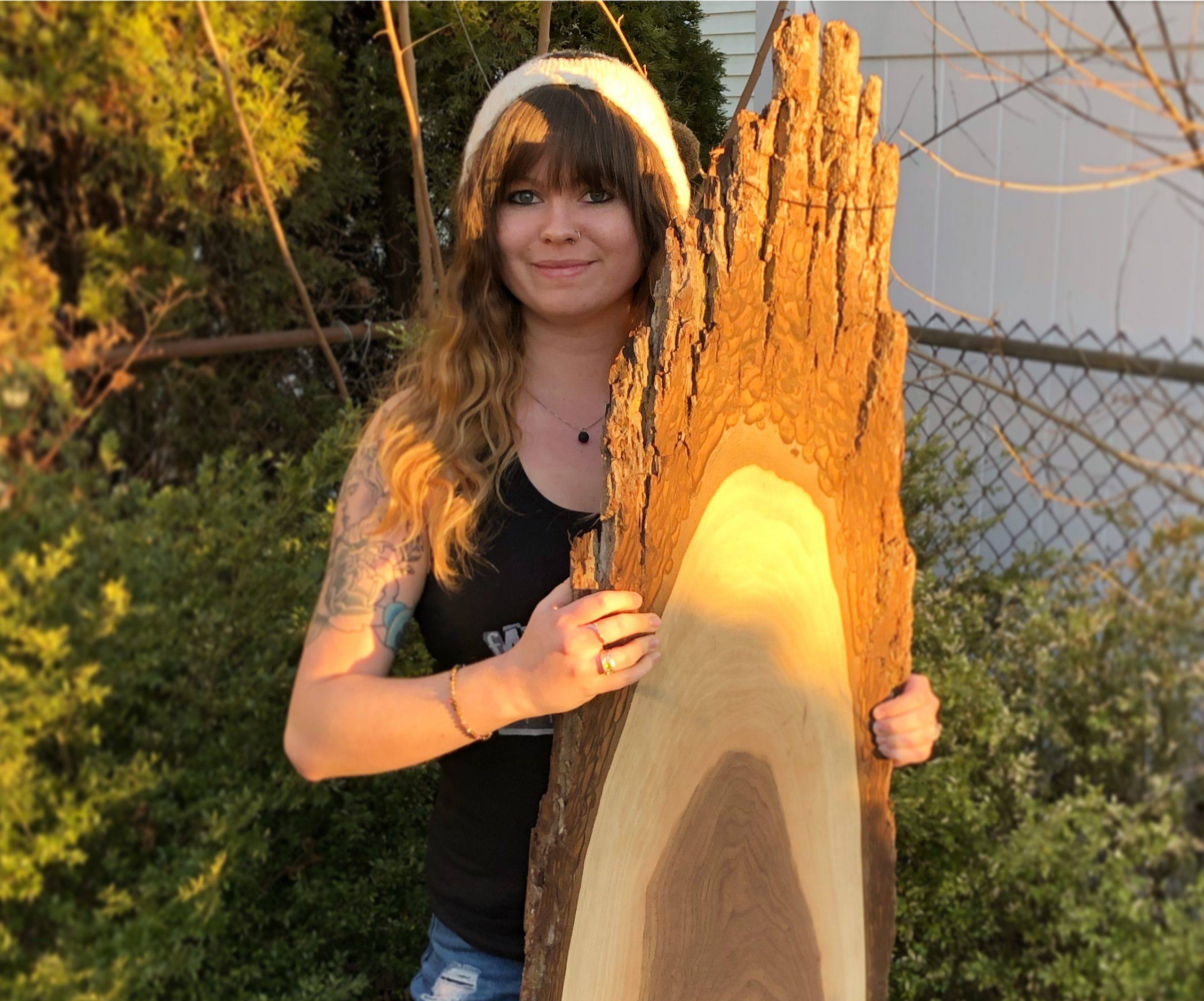
For this week’s creator spotlight, we would like you to meet artist and owner of Mark it with a B Gallery, Brandy Roels!

What was the inspiration behind becoming a creator? What do you enjoy most about the creative process?

I started drawing at age three (always animals) and admired pet portrait artists. What I enjoy the most is being able to share more of myself in my pieces. Not just making pretty pieces but making emotional pieces – expressing my emotions and evoking emotions for the viewer. Along with portraits, I make personal pieces to express my deep emotions or unsolved past trauma. I found it does help heal me and certainly is therapeutic. My creative process is more mellow and slow, versus my fast hatch-marking fur technique I do for pet portraits.

Can you take us through your creative process? How long does it take? Does everything you produce make money?

First, I have to say that not everything I create makes money. Some pieces never get sold. Having a business as an artist is very hard work, and you have to be on top of it all the time with creating and promoting. I run my business full time, and I love what I do! For my creative process, the time varies based on the size and details of the piece. I love working with my hands and touching different materials, so each of my pieces are completely handmade. I start by drawing my designs directly onto the wood with a classic graphite pencil. I like to create what I call a “value map” by lightly sketching groupings of where the highlights and shadows are, so then I have a value structure to follow when filling in the fur. Then I just get to burning! I use a Colwood Detailer burner by Colwood. I also only use the ball point tip for absolutely every piece I make. I am able to do everything with it! Lastly, I add paint elements. Since I was a portrait painter, I love to use various types of paint. I just enjoy the feeling of spreading paint around – especially on smooth wood. I find I end up blending my paint strokes in with my woodburning marks, such as adding short brushstrokes of color in with an animal’s fur. I like everything I use to be water soluble too, so even the oil paint is safe to use with water.

What do you think is the biggest misconception about your line of work?

I would say the biggest misconception in my field is whether a piece is truly handmade. With various creators now using laser engraving machines to burn designs, it has become difficult to find where the line is between being handmade versus machine-made. I am part of a large woodburning community on social media that only use handheld woodburning pens, where the artist is truly handmaking each of their pieces, like putting pen to paper. For laser engraving, it seems the handmade quality is taken out of the equation by having the machine burn for you.

This has certainly always been a debate, but I do see the useful benefits of having a laser engraving machine when you are using your own designs only. Personally, I love using my handheld burner and enjoy creating with my hands.

When did you first become aware of copyright, and why?

Learning about copyright was part of my studies while attending the Savannah College of Art and Design (SCAD). I remember we even had a copyright lawyer visit during one of our classes to discuss various rules and regulations. The professors at SCAD wanted to guarantee we understood the importance of copyright, and everything we made from then on out needed to be our own original artwork. It is fine to be inspired by something or someone else, but you must make it your own – not just copy it.

What do you do when you encounter someone stealing something you have invested your intellect, time and money into?

For starters, I suggest that artists always register their works with the U.S. Copyright Office. When I see someone clearly took my artwork or obviously copied it, I always reach out to them. I have no problem doing so, especially when it comes to defending myself or my art. Most of the time, people will apologize and tag me to give me credit. The furthest it has escalated for me was having to report the person on social media. Not as big of a deal as having to go to court, of course. Usually after that, the person’s post is taken down. For something on a larger scale, I would definitely contact a copyright lawyer on how to proceed.

What is your biggest copyright-related challenge?

My biggest challenge is struggling between my urge to share what I know to help others on social media and knowing that I run the risk of having my work reused without my knowledge. Part of what I love doing with my business is sharing every part of my process with others. I am always happy to answer any question about my creative process, techniques, the products I use, how I run my business, etc. I even post tutorial videos of my pieces because I enjoy helping others learn and achieve their artistic goals. In the end, if I can help someone skip all the struggling that I had to go through in getting to where I am now, then that is so fulfilling. Why not help a fellow artist?

To see more of Brandy’s work, visit her website or follow her on Instagram.


Are you one of our Individual Creator Members? Participate in our Creator Spotlight series! Please email us at cawebsite@copyrightalliance.org. And if you aren’t already a member of the Alliance, you can join today by completing our Individual Creator Members membership form!

Q&A with Senator Thom Tillis, Chairman of the Intellectual Property Subcommittee

Senator Thom Tillis Post publish date: September 8, 2020

I recently had the opportunity to share some questions with Senator Thom Tillis (R-NC) about a number of critical topics, ranging from DMCA reform to digital video piracy to his dedication to his role as the Chairman of the Senate Judiciary IP Subcommittee, and much more. Read on to learn what Senator Tillis had to say.

Keith: What are your responsibilities as Chairman of the Senate IP Subcommittee, particularly with regard to copyright law?

Senator Tillis: For almost twelve years, the Senate Judiciary Committee did not have a dedicated intellectual property subcommittee. But intellectual property is critical to the U.S. economy, and it really needed to have its own specialized subcommittee so that we can focus on deeply reviewing our intellectual property laws and examining spaces where legislative reform would better serve creators, innovators, businesses, and the public. As the first Chairman of the reconstituted Subcommittee on Intellectual Property, I believe it is my responsibility to ensure that our intellectual property system – so our copyright laws, and our patent laws, and trademark, and trade secrets – works the best it possibly can to foster American creativity and innovation. Put more strongly, my goal is to promote policies that will ensure America’s innovation and creative economies continue to be the best in the world. To do so, I’ve focused on doing some long overdue reviews of our copyright administrative system and our copyright, patent, and trademark laws. Last year I focused on potential reform of patent eligibility, and this year the Subcommittee is holding a series of hearings on reform of the Digital Millennium Copyright Act, with an eye toward releasing draft legislation in December.

Keith: What one thing do you wish that more people understood about copyright?

Senator Tillis: The critical role that creativity plays in the U.S. economy, and in the economy of the great state of North Carolina. I first became interested in intellectual property during my career before politics, working in technology and business consulting. Copyright is the engine of creative expression – it provides the incentives that allow aspiring authors to turn an idea into a best-selling story and with it a career. Copyright law also helps the United States be the entertainment capital of the world, and it contributes to millions of jobs across the country.

Keith: What do you think is the country’s biggest copyright-related challenge?

Senator Tillis: The United States has long provided a model to the world of the ideal copyright system, but U.S. copyright law is long overdue for an update. The last major overhaul of copyright law was with the enactment of the Copyright Act of 1976. The Digital Millennium Copyright Act helped bring U.S. copyright law into the internet age when it was enacted in 1998. But the DMCA is also showing the wear and tear of more than two decades of trying to adapt to changes in technologies and business models that Congress couldn’t have anticipated. When the DMCA was originally enacted, section 512 was viewed as a compromise between copyright owners and nascent online service providers. In exchange for receiving a limitation on liability for the infringing activities of users, online service providers were supposed to take specific actions to help curb online piracy, including making reasonable efforts to remove pirated material once they received notice that it was online. Unfortunately, this grand bargain is no longer working, and the notice-and-takedown system, which is a key component of the DMCA, isn’t achieving the policy goals Congress intended.

Keith: You’re working on drafting legislation that would close the loophole for criminal streaming piracy so that it is treated like a felony just as criminal reproduction and distribution are. Why do you think that this is important?

Senator Tillis: Global digital video piracy costs the U.S. economy something like $30 billion each year – and the vast majority of that is attributable to illegal streaming of copyright protected works. In part this is because the internet has grown so dramatically in recently years and technology has advanced to make new forms of dissemination possible that weren’t before. Just as the Subcommittee is reviewing the DMCA so that the law can be updated where appropriate to reflect changes to the world the law operates within, our criminal copyright laws also require some updating. As you noted, currently, criminal streaming of copyrighted works – that’s what is done by large commercial enterprises that stream unlicensed films and programs – is only a misdemeanor, but criminal reproduction and distribution – like bootleg DVD street markets – are felonies. This doesn’t make sense. It’s bad policy, and it hurts our creative community. That’s why my staff and I have spent this year working to develop legislation that will close this felony streaming loophole and benefit both copyright owners and users. Copyright owners will have their interests better protected by the backing of potential Department of Justice felony prosecution of large commercial enterprises profiting off illicit streaming, while users will be better protected from the potential malware, spyware, and viruses that these pirates can introduce through their criminal streaming operations.

Keith: As you and your office continue to hold hearings to assess the effectiveness or ineffectiveness of the Digital Millennium Copyright Act (DMCA), what parts of this law do you think need updating in order for it to work well in the 21st century?

Senator Tillis: Thus far, our four hearings have focused on why the DMCA was originally enacted; approaches that other countries have taken to curb infringement online while encouraging growth of internet companies; the operation and effectiveness of section 512; and how the DMCA contemplates the doctrine of fair use. My Subcommittee will hold a hearing this month on section 1201, which prohibits circumvention of technological protection measures like encryption for DVDs and watermarks on photographs. We also will hold a hearing next month on the role of voluntary agreements between private companies that supplement that legal regime created by the DMCA. I’ve been learning a lot from all of our witnesses, and I look forward to the remaining hearings. At this point, I’m still reviewing the record, but one thing that has become clear is that the DMCA is no longer working as Congress intended it in 1998, and my staff and I are laboring to identify ways to amend the statute to help restore the balance. The fantastic growth of the internet has had the consequence of making the notice-and-takedown process unworkable for most copyright owners and many service providers. When a copyright owner notifies a service provider of an infringing work, it needs to come down and stay down. I’m also concerned that the process for putting back a work that should not have been taken down does not work for anyone. And I’m looking forward to our section 1201 hearing this month because my sense is that we may need to tweak that provision to ensure that the exemptions adequately account for consumer concerns, including by allowing for third-party repair of software-enabled devices.

Keith: With it being very easy to pirate the works of others, particularly online, do you believe that legislation is needed to help small creators combat these illegal activities?

Senator Tillis: Absolutely, and there is a great piece of legislation that I’ve co-sponsored that would do just that. The CASE Act is a critical piece of copyright legislation that would help individual authors quickly and effectively secure remedies for copyright infringement. Artists – from writers and photographers to musicians and software designers and all other kinds of creatives – play an important role in our communities and in our economy, but often the benefits of copyright protection lie practically out of reach because of the time and costs involved with enforcement through federal courts. The CASE Act will create a more efficient way for copyright holders to protect their intellectual property and ensure that our content creators can be properly paid when their work is used without authorization.

Keith: What are specific IP-related successes that you hope to deliver over the short-term and the long-term?

Senator Tillis: I am honored to have co-sponsored several important pieces of bipartisan IP legislation, and I am hopeful that these will all be successful both in the short-term and the long-term. Among these I count the CASE Act, which has already passed out of the House and out of the Senate Judiciary Committee. I’m also very proud of the work my staff and I are doing to patch the streaming loophole. And I’ve been busy working with stakeholders on consensus-driven legislation to modernize the U.S. Copyright Office. As I look ahead to my second term, intellectual property issues will remain a top priority for me, and I look forward to continuing to work with the Copyright Alliance and other key stakeholders to achieve meaningful reforms.

Copyright Alliance Survey Reveals Growing Threat of State Infringement

US Map Post publish date: September 3, 2020

This week, the Copyright Alliance submitted comments to the Copyright Office in response to its Notice of Inquiry (NOI) for public comment on the extent to which copyright owners experience infringement by state entities that are largely immune to copyright claims due to the doctrine of state sovereign immunity. To assist the Copyright Office in its study, the Copyright Alliance launched a public survey soliciting feedback from copyright owners on their experiences with infringement by states and conducted interviews with a number of individual creators and organizations that have encountered state infringement. As a result of this research, compelling evidence was compiled showing that remedies against state infringement are inadequate or non-existent and that state copyright infringement is a frequent and damaging occurrence that will increasingly threaten the goals of the copyright system unless corrected.

Survey Responses

The responses to the Copyright Alliance survey, which asked many of the same questions listed in the Copyright Office NOI, revealed that creators and copyright owners have encountered thousands of instances of infringement by state entities, resulting in lost revenue of countless millions of dollars. Over the brief time that the survey was open, 115 respondents answered that they had experienced infringement by a state or state entity-with the vast majority experiencing multiple infringements. Of the respondents who said they have encountered state infringement, 52% described multiple instances of state infringement, using words such as “countless,” “at least a dozen,” “thousands,” and “infinitely many.”

The survey asked respondents to select the year (between 1976 and 2020) that they discovered infringement by a state entity, and although infringement was reported as far back as 1978, a trend of increased infringements is apparent, starting in the mid-to-late 90s and increasing yearly through the 2000s and 2010s, with the most instances occurring in 2019. The consistent rise over the last twenty years corresponds not only to the growth of the internet, but with a pair of cases of at the turn of the century that challenged the validity of the Copyright Remedy Clarification Act (CRCA)-a 1990 law that abrogated state immunity from copyright claims-and effectively opened the door to a new era of unchecked state infringement.

infringement yearly by state entity

The Copyright Alliance survey also asked respondents to identify the type of work(s) infringed, allowing them to choose as many categories as appropriate from a list of fourteen. Photographs were the most commonly infringed works, with written materials-such as books, poems, blogs, or articles-coming in second place. Instances of infringement involving sound recordings, television programs, and motion pictures were also identified, as well as some less-common infringements involving other categories shown in the figure below.

infringement by type of work

The states in which alleged infringement was most frequently reported were Texas, New York, California, and Illinois, but instances of infringement were reported in all fifty states. When asked what type of state entity infringed, an overwhelming majority of respondents identified state universities or institutions of higher learning. Other state entities identified by respondents included state tourism boards, departments of natural resources, and museums.

Importantly, 68% of copyright owners responded that they believe they’ve lost revenue or licensing opportunities due to state infringement. Many of the respondents went on to describe the losses they incurred, including lost book sales, lost subscription and licensing fees for photographs and video footage, and also more intangible losses, such as careers cut short due to lost revenue and time spent trying to stop the infringement.

State Copyright Ownership

One of the glaring injustices related to state sovereign immunity is the fact that state entities continuously reap the benefits of the copyright system by registering and enforcing their own copyrights while at the same time enjoying immunity from monetary damages in infringement claims. To help show the extent to which state entities own copyrights, the Copyright Alliance conducted keyword searches using the Copyright Office’s public catalog of registrations. Searches were run using the “Name Claimant” option that combined keywords, such as “university,” “department,” “hospital,” “commission,” and many others, with the names of large and heavily populated states, such as New York, Texas, and California.

The keyword search that returned the most results in each case was the state name combined with “university.” For the state of Texas, there were 6,095 registered works, with a variety of entities associated with the University of Texas, Texas A&M University, Texas Tech University, and other public institutions of higher education listed as the copyright claimant. Running the same search for the state of New York returned 9,994 registered works, and a state of California search returned over 10,000 registered works. While additional research should be done to explore the scale of state copyright registrations, the results are indicative of states’ reliance on the copyright system to register and protect works.

Creator Stories

In addition to the survey, interviews were conducted with a number of Copyright Alliance members and individual creators whose stories provide insights into increasingly harmful instances of state infringement and the inadequacy of available remedies. The comments detail the experiences of photographers, authors, documentary filmmakers, and other copyright owners, all of whom have encountered infringement by state entities over the past twenty years.

While the specifics of the individuals’ experiences varied, a number of common themes emerged. Nearly all of the creators interviewed said that they had encountered infringement by state school districts, universities, or other institutions of higher learning-and many of them identified infringement by these educational entities in more than one state. The creators also noted that they do not actively monitor for infringement and found out about the unauthorized uses by accident, which indicates the amount of infringement identified is only the tip of the iceberg.

All of the individuals interviewed pursued claims against the infringing state entities, resulting in sometimes protracted legal battles that cost hundreds of thousands of dollars of their own money. In addition to money spent on lawsuits, lost profits, and spoiled licensing opportunities, the creators spoke of the time lost attempting to monitor for and stop infringement-time that should have been spent on creative endeavors.

Finally, the creators all expressed deep frustration with a copyright system that is allowing state entities to infringe without meaningful consequence and thereby robbing them of the exclusive rights guaranteed by copyright law. For best-selling author Dr. Keith Bell, the experience of feeling powerless to control his works and combat infringement led directly to his decision to stop writing. While it’s impossible to measure the cultural losses incurred as a result of those who have abandoned creative pursuits due to overwhelming state infringement, these losses are completely counter to the goals of the copyright system to incentivize the creation of new works.

Lack of Adequate State Remedies

In response to the Copyright Office NOI, the Copyright Alliance also looked into the availability and adequacy of state remedies to address the needs of copyright owners. Our research, combined with the survey results and creator interviews, revealed that the availability of state remedies is limited due to a number of issues, including federal preemption of state claims, the absence of tested causes of action under state law, and immunity from suits in their own courts that states enjoy as a result of statutory or constitutional provisions. The patchwork of varying state laws is also testament to the incapability of states to provide the type of uniform protection traditionally afforded copyright owners under federal law.

The Copyright Alliance’s research also found that injunctions, while theoretically available to copyright owners when confronted with state infringement, are neither an adequate remedy nor an effective deterrent to infringement. Not only can they be prohibitively expensive, but injunctions offer only prospective relief and do nothing to remedy past injury. Injunctions have been described by experts as a “poor substitute” for the recovery of damages, and by themselves do not allow copyright owners to obtain the complete relief otherwise provided for under the Copyright Act.

Recommendation for Abrogating State Sovereign Immunity

The evidence gathered by the Copyright Alliance shows that instances of state infringement have increased exponentially over the twenty years since the validity of the CRCA was thrown into question, and copyright owners now find themselves navigating an uncertain system comprised of inadequate remedies that deprive them of the exclusive rights guaranteed to them under Section 106 and Section 1201 of the Copyright Act. In the Supreme Court’s recent Allen v. Cooper decision, the Court laid out a path for legislative action, suggesting that if Congress can develop a legislative record that demonstrates the necessary evidence of unconstitutional state conduct and link the scope of its abrogation to the redress or prevention of unconstitutional injuries, abrogation of state sovereign immunity would be appropriate pursuant to Section 5 of the Fourteenth Amendment. Based on the findings of our study and information that other commentators will provide to the Copyright Office, the Copyright Alliance believes there is sufficient evidence to support legislation following the Court’s guidance in Allen v. Cooper that would abrogate state sovereign immunity in copyright infringement cases.

Photo credit: Denys/iStock

An Overview of My Copyright Alliance Legal Internship: The Critical Importance of Copyright, Creators, and Community in Securing Legal Agency for Artists

statue of women holding up a scale Post publish date: September 1, 2020

What is, arguably, one of the greatest injustices faced by artists in the United States?

My answer would be the lack of legal agency. The reality that artists lack legal agency to protect their original works of authorship from infringement is a systemic fault that deserves an adequate remedy.

Late last year, in an effort to address this injustice among artists, the United States House of Representatives passed the Copyright Alternative in Small-Claims Enforcement Act, known as the CASE Act, with an overwhelming 410-6 majority vote. The CASE Act would provide a low-cost, streamlined mechanism for artists to enforce their copyrights through the creation of a Copyright Claims Board, located within the U.S. Copyright Office, to decide copyright disputes over claims equal to or less than $30,000. However, since the Act’s sweeping passage in the House, all progress towards meaningful action has been entirely halted by a single Senator from Oregon. The fact that one person has the power to stand in the way of promoting the progress of the arts is, to me, a needless thorn in the thicket of briar that makes up the wide-spread injustices artists in the creative community already regularly confront.

The CASE Act is a necessary step Congress and the Copyright Office can take to ensure reasonable remedies for artists. Through the establishment of a Copyright Claims Board, the Office would be able to use its expertise to make informed decisions that promote the goals of copyright and provide creators with an alternative to pursuing claims in federal court. As musicians and copyright owners Marti Cuevas and Carlos Martin Carle explain, under the CASE Act, artists would have a reasonable opportunity to enforce their copyrights and prevent rampant infringement without breaking the bank in legal fees associated with federal litigation costs.

Nevertheless, the infringement creators regularly encounter is widespread, and enactment of the CASE Act is only the first step towards establishing much needed mechanisms to ensure the legal agency of artists. Action must be taken in order to close the streaming loophole, which allows rampant streaming piracy to occur without meaningful consequence. There is also a glaring imbalance in the current DMCA notice-and-takedown system, which classical composer Kerry Muzzey described in his testimony at the Senate Subcommittee on IP hearing on notice and takedown earlier this summer as besieged by “a sea of big tech Goliaths.” It’s also essential that Congress carefully consider abrogating state sovereign immunity in copyright infringement cases, so that creators like Rick Allen no longer have to fight costly, extensive legal battles with seemingly untouchable state entities.

These are all issues that the Copyright Alliance is working on to help preserve the value of copyright and protect the right of creators in our communities, and I was fortunate enough to support these efforts as part of my Legal Internship.

However, as too many artists in the copyright and creative communities have undoubtedly experienced during the current global pandemic, legal agency is further crippled by a lack of financial resources. Far too often when budgets are reviewed, or economies stall under hardship, the arts are the first to be depleted of resources and agency. Terrica Carrington explained back in April when COVID-19 was just beginning to wreak havoc in our communities that most full-time artists are considered working-class citizens in which the average musician in the U.S. earns $35,000 per year, the average photographer makes $34,000 and the average author grosses just $20,300. These pre-COVID-19 figures have certainly dropped due to cancelled exhibitions, concerts, gigs and book signings, and further decreased sales of visual art, artisan crafts, and other handmade works have threatened creators’ livelihoods.

While many organizations have come to the aid of artists during this time of need, some have sought to further exploit artists and deprive them of their exclusive rights as copyright owners. One such organization is the Internet Archive, which Keith Kupferschmid revealed has been taking advantage of artists for its own selfish gain well before the pandemic. To add further insult to injury, this past March the Internet Archive announced its “National Emergency Library,” which essentially bypassed the entire U.S. copyright legal framework by allowing for the unauthorized distribution of millions of works of authorship. In June, the Association for American Publishers, on behalf of its book publisher members, sued Internet Archive for its blatant theft of authors’ copyrighted works. The National Emergency Library has since been closed, but the economic damage suffered by authors as a result of this organization’s actions will have a lasting impact.

Unfortunately, artists’ lack of financial resources is not solely caused by COVID-19. Although the global pandemic has made it harder for artists to make a living, insufficient investments in arts education has caused continual suffering to artists. From my own educational experience, investment in the arts is lacking, even among institutions that praise interdisciplinary studies and strongly support STEM projects. Arts programs are routinely defunded, despite the fact that arts education establishes a foundation for securing legal agency for artists.

This is why I have long admired the view of former President and notable advocate for the arts, John F. Kennedy, that if more politicians knew poetry and more poets knew politics the world would be a much better place to live. I would similarly suggest that if more lawyers knew art and more artists knew law the world would be a much more just place. Lawyers and those who are educated in the law should not turn a blind eye to the arts; likewise, artists should not be discouraged by gaps in the law. There are ongoing efforts to better protect the rights of artists and copyright owners, and I’m proud to have been able to help support them.

Photo credit: utah778/iStock

Creator Spotlight with Hair Creative Leah Watson

Hair Creative Leah Watson Post publish date: August 25, 2020

This week we would like you to meet Leah Watson, a Maryland-based hair creative and owner of Cut Junkie!

What was the inspiration behind becoming a creator? 
Growing up, I spent a lot of time alone. About the age of 13, I realized that I liked art. I loved colors and shapes. I would cut up magazines and books creating head to toe looks.

What do you enjoy most about the creative process?
I love the whole process of creating. I enjoy the vision of what I imagine in my head then seeing the finished product as I had envisioned it.

Can you take us through your creative process? How long does it take? Does everything you produce make money? 
For me, it may start with a word or sometimes it’s a shape, then I instantly go into the creative process, which is usually started on a napkin! My Cut Junkie brand is profitable but I’ve always created brand concepts just for fun too.

What do you think is the biggest misconception about your line of work? 
I think the biggest misconception about being a Hair Creative is that everyone in this field is creative. The problem is that a lot of people aren’t taught to create from an authentic place. Instead, they are given instructions such as “hold it this way” or “cut it that way.” To me that’s mimicking, not truly creating!

When did you first become aware of copyright and why? 
Several years ago, I was an educator for a shear company. The owner asked me to present a class at an event she was hosting. I agreed because I wanted to be able to put the title of guest speaker on my resume. So I put together a presentation, which the owner recorded during her event. Originally, I told her I didn’t want to be videoed, but later we discussed using the video to promote my work. So, I agreed she could use the footage, thinking it would be a promotion for my skills.  However, she turned it into a shear sharpening DVD to promote her business using my full presentation without my consent. Then, I found out it was being sold on her website and she had given herself production rights. I had to obtain a lawyer who sent her cease and desist papers. The owner was very upset with me but agreed to send the remaining DVD copies she had left… all of which were smashed!

Have you experienced copyright infringement and if so, how has it affected you personally and financially? 
After the DVD situation, I realized that I needed to protect everything I create.

What do you do when you encounter someone stealing something you’ve invested your intellect, time and money into? 
In this age of social media, it’s become harder to protect your intellectual property. But typically, I’ll use a watermark and place it somewhere where on my work where removal would result in distorting the image.

What is the best piece of advice that you would give other creators in your field about copyright and how to protect themselves? 
As human beings, one of the most important things we can possess is our integrity. And I always advise fellow creators (and everyone) to have and value Integrity regarding their work and everyone else’s work.


Are you one of our Individual Creator Members? Participate in our Creator Spotlight series! Please email us at cawebsite@copyrightalliance.org. And if you aren’t already a member of the Alliance, you can join today by completing our Individual Creator Members membership form!

>